
 en
en
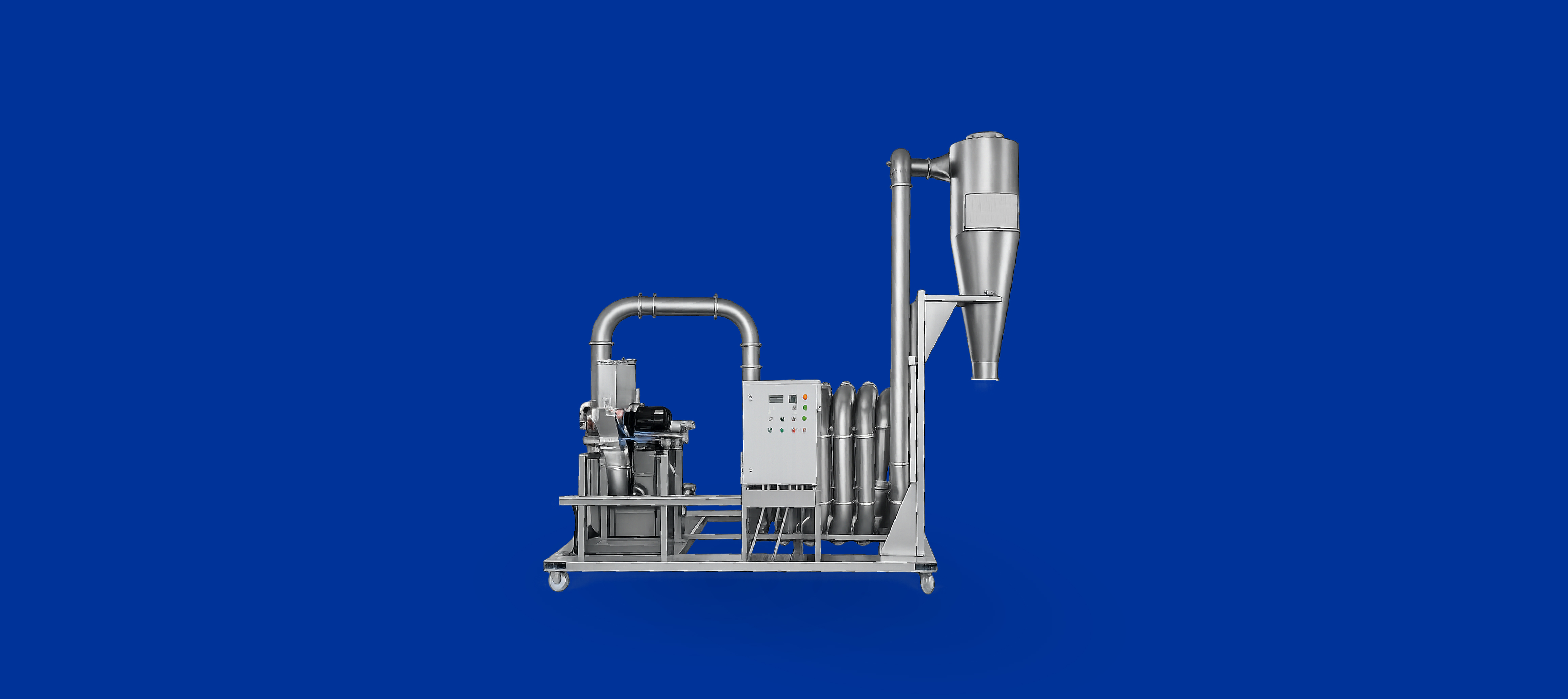
Dry-Cut Pelletizing from SIKOPLAST
An economical pelletizing process for plastics that can be processed without water-based cooling.
Dry-cut pelletizing (also known as hot die face air pelletizing) is a proven method in which molten plastic is pushed through a die plate and directly cut at the die face by rotating knives. The process is especially suitable for standard polymers, regranulates, and production scrap where a stable and cost-efficient process is more important than achieving a perfectly uniform pellet shape.
SIKOPLAST supplies systems that can be adapted to different material flows and integrated into existing extrusion lines with minimal effort. The system configuration is tailored to the material behavior, desired throughput, number of strands or die holes, and the required pellet size.
Operating Principle & Technical Process
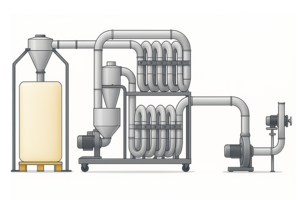
During dry-cut pelletizing, the melt exits the extruder through the die plate of the pelletizing system and is immediately cut into pellets by a rotating knife assembly.
The resulting pellets are then cooled within an air stream, separated, conveyed, dedusted, and finally transferred into packaging, storage, or the downstream material handling process. The clearly separated process stages create a stable production flow suitable for continuous long-term operation.
Process Overview
- The melt exits the extruder and enters the die plate of the pelletizing system
- A strand puller guides the material into the pelletizer
- The knife assembly mechanically cuts the melt into pellets
- The pellets are cooled by an air stream
- Pneumatic conveying lines transport the pellets while a cyclone separator separates air from the granulate
- Optional screening and dedusting improve material quality within the process
- The finished pellets are transferred into the internal conveying system or filling station
Advantages of a SIKOPLAST Dry-Cut Pelletizing System
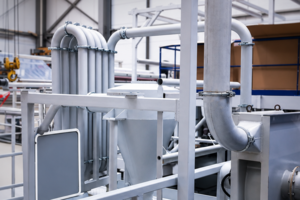
A dry-cut pelletizing system from SIKOPLAST is an ideal solution for companies looking to maintain stable production processes with manageable technical complexity. Since the process does not require process water, the overall system design remains significantly simpler.
The systems are engineered to reliably process standard materials and regranulates while maintaining consistent cutting quality even with fluctuating strand conditions.
Operation is clearly structured, all components are easily accessible, and the compact design allows space-saving integration into existing production environments. Wear parts can be replaced quickly, keeping operating costs predictable. In addition, spare parts remain available over long periods, ensuring long-term support even after many years of operation.
Key Advantages at a Glance

Reliable processing of standard materials and regranulates
Reduced technical complexity since no process water is required
Consistent cutting quality during extended operating periods
Easy integration into existing extrusion lines
Easily accessible components for short maintenance times
Economical operation with manageable consumption values
These characteristics make dry-cut pelletizing particularly suitable for companies seeking robust and economically efficient systems for processing standard polymers.
FAQ
Which plastics are particularly suitable for this process?
Primarily standard polymers such as LD-PE, LLD-PE, MD-PE, HD-PE, as well as regranulates and production scrap.
What are typical throughput capacities?
The system is always designed according to the existing extruder. Throughput depends on the material and the number of strands or die holes and can reach up to approximately 200–250 kg/h.
Can the system be combined with water-based cooling systems?
Yes. An upstream water bath can be integrated if the material requires additional cooling.
How complex is the cleaning process?
The system components are openly accessible, allowing maintenance and cleaning work to be carried out without extended downtime.