
 en
en
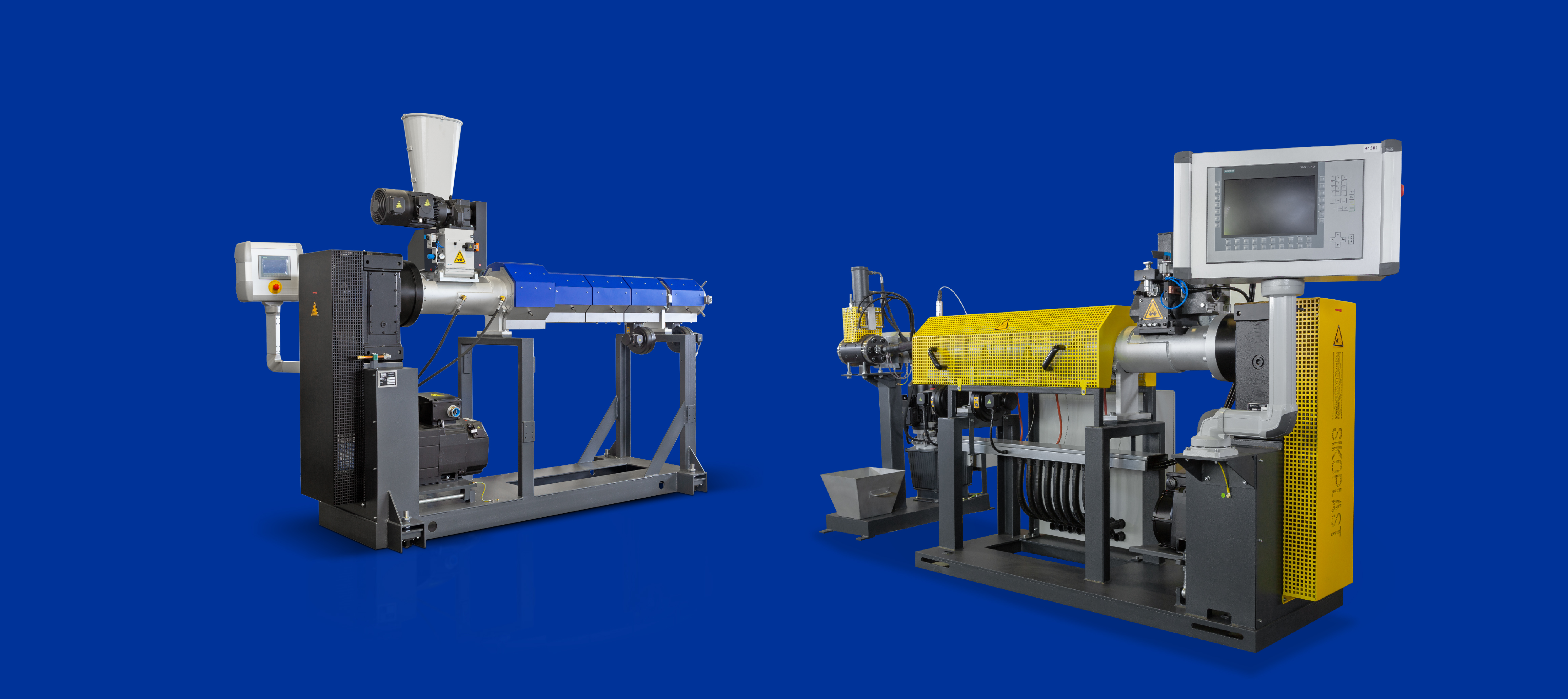
SIKOPLAST Single-Screw Extruder: Inline Recycling Without Pelletizing
In nonwoven and PE/PP film production, edge trim and start-up rolls are continuously generated. Companies that recycle this waste through pelletizing subject the material to two heating stages: one during pelletizing and another during remelting. Each stage places additional stress on the material.
The SIKOPLAST single-screw extruder (SIKOREX series) eliminates this intermediate step. The waste is fed directly back into the production extruder as melt — without pelletizing and without double thermal stress.
Conical Screw with Short L/D Ratio: Gentle on Material and Fast Changeovers
The single-screw extruder operates with a conical screw and a short L/D ratio. This combination has two direct effects:
Short Residence Time: The material remains in the extruder for a shorter period. This reduces thermal stress, which is particularly important for temperature-sensitive nonwovens with high MFI content as well as for 100% meltblown material.
Fast Material and Color Changes: The short L/D ratio, combined with a purge bore, enables quick changes between materials and colors. The system does not need to be stopped during changeovers.
For hydrophilic or hydroentangled nonwovens, a modified version is available featuring:
- Extended screw (6 × L/D)
- Vacuum pump for degassing
- Melt pump for precise recirculation control
Feeding Without Pre-Shredding: Direct Processing of Edge Trim and Rolls
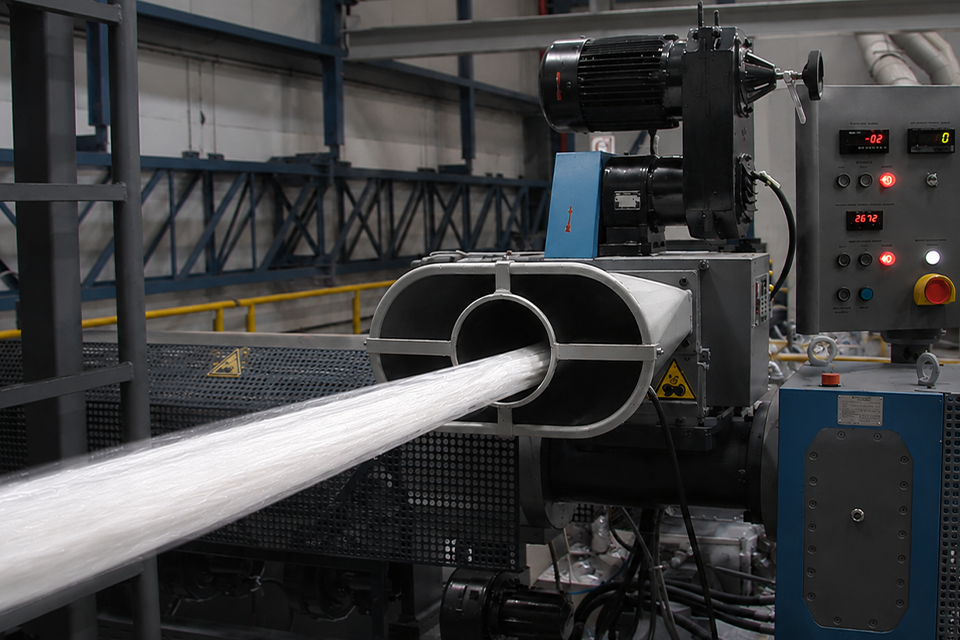
The single-screw extruder processes material directly from the feeding stage — without an upstream granulator. This is made possible by the conical screw, which securely grips and compacts lightweight, non-free-flowing materials in the feed zone.
Two feeding variants are available:
- Inline feeding: Edge trim is fed directly from the nonwoven winder at speeds of up to 375 m/min (higher speeds available on request).
- Offline roll feeding: Damaged rolls or start-up rolls are fed through a separate roll feeding system, often at full width.
Both feeding systems can operate simultaneously and are controlled independently. The roll feeding system compensates for fluctuations in material flow and maintains a constant recirculation rate.
Melt Fed Directly Into the Production Extruder: Technical Advantages
The molten material is transported directly into the production extruder via a melt pipe. An integrated check valve prevents melt from flowing back out of the production line. A pressure sensor continuously monitors melt pressure.
An optional melt metering pump ensures a precisely defined recirculation rate, even when throughput in the production system fluctuates. In addition, a screen changer for melt filtration can be integrated, while a purge bore or automatic start-up diverter simplifies system start-up.
Technical Data
| Feature | Value |
|---|---|
Throughput | 30–250 kg/h per extruder |
Edge trim feed speed | Up to 375 m/min (higher speeds on request) |
Screw geometry | Conical, short L/D ratio |
Special version (hydrophilic nonwovens) | 6 × L/D, vacuum pump, melt pump |
Pre-shredding | Not required |
Output | Melt (direct recirculation) |
Integration Into the SIKOPLAST Extrusion Line
The single-screw extruder is a core component of SIKOPLAST extrusion systems. It forms the basis of the SIKOREX line for direct edge trim recycling as well as the hybrid line for spunbond nonwoven production.
FAQ
Which materials is the single-screw extruder designed for?
Primarily for the nonwoven and PE/PP film industry: edge trim, start-up rolls, and roll goods made from PP, PE, as well as nonwovens (SMS) with high MFI content — including 100% meltblown material.
Why is pelletizing unnecessary?
The melt is fed directly from the extruder into the production extruder. A separate pelletizing step is not required. This eliminates an entire heating stage and reduces energy consumption compared to offline systems.
Can an existing production line be retrofitted?
Yes. The single-screw extruder can be integrated into existing production lines. SIKOPLAST provides consulting for the specific integration process.
What information is required for a quotation?
Material type and form, production line feed speed, desired recirculation rate, available installation space, and information on whether edge trim, rolls, or both are to be processed.