
 en
en
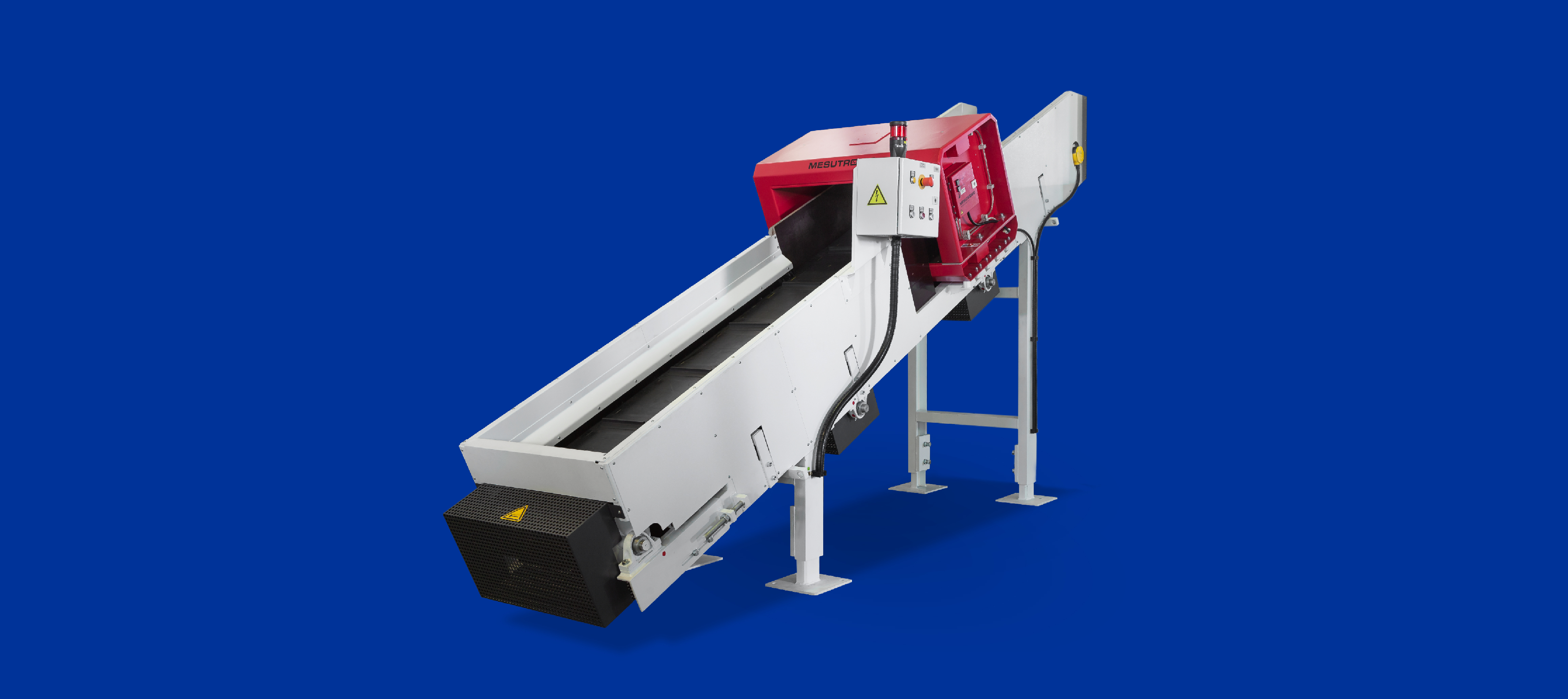
Conveyor Belts for the Recycling Industry: Process Stability Through Automated Conveyor Technology
In modern recycling plants, continuous material flow is essential for achieving high throughput rates. A SIKOPLAST conveyor belt directly connects individual processing stages, for example, from size reduction in the granulator to cleaning in the friction washer, ensuring continuous feeding into recycling and washing systems. By automating these transfer points, manual interfaces are eliminated, increasing process stability and optimizing the overall material flow.
Operating Principle and Proactive Equipment Protection
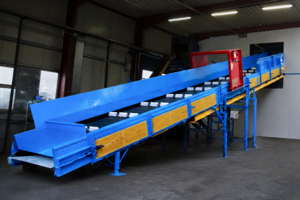
The belt conveyor serves as the mechanical link between individual processing units. To protect downstream machinery such as shredders or bale openers from costly damage, SIKOPLAST offers integrated equipment protection solutions:
- Detection of Contaminants: By optionally integrating a metal detector, ferrous and non-ferrous metals can be reliably identified within the material flow.
- Process Response: Depending on the technical configuration, the material flow can either be stopped automatically or a signal can be issued for manual process intervention when foreign objects are detected. This prevents contaminants from reaching the knives or rollers of downstream machinery.
Technical Configurations of the Conveyor Technology
SIKOPLAST develops solutions that integrate precisely into existing production lines. The selection of the drive type and conveyor design depends on the required conveying load and belt speed.
| Feature | Technical Options |
|---|---|
Conveyor Designs | Single-belt systems or double-belt systems |
Drive Types | Head drive, center drive, or drive pulley |
Safety | Designed according to industrial conveyor safety standards |
Additional Features | Optional metal detector for non-ferrous metal detection |
Maintenance and Industrial Durability
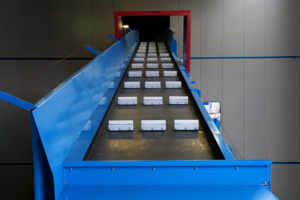
The conveyor system is designed for continuous operation under the demanding mechanical conditions of plastics processing.
Wear Resistance
The robust frame construction ensures stable operation even under maximum conveying loads.
Maintenance Accessibility
The mechanical design allows direct access to drive components, simplifying and accelerating maintenance work.
Space-Saving Design
Thanks to its compact dimensions, the conveyor system can be flexibly positioned even in facilities with limited floor space.
Your Advantages: Why Choose Conveyor Technology from SIKOPLAST?
Our belt conveyor systems are designed to reduce long-term operating costs while maximizing plant safety. We focus on engineering details proven in demanding recycling environments:

Minimized Downtime
Thanks to the use of robust frame profiles, the conveyor belts remain stable even under uneven loads, reducing belt edge wear.

Maximum Investment Protection
Optional metal detection shuts down the system before foreign objects can damage the knives of shredders or granulators. This prevents costly repairs and extended production downtime.

Flexible Plant Layout
With both head and center drive options available, the conveyor technology can be adapted efficiently to the structural conditions of your facility.

Low Maintenance Requirements
Lubrication points and tensioning devices are positioned for easy access by maintenance personnel without requiring disassembly of surrounding components.
FAQ
Can the conveyor belts be integrated into existing recycling lines?
Yes. Thanks to their modular design and various drive configurations, SIKOPLAST conveyor systems can be seamlessly integrated into existing systems from different manufacturers.
Which materials can be conveyed?
The systems are designed for transporting plastic waste such as films, regrind, baled materials, or startup lumps. Depending on the material properties, we select the appropriate belt type, for example particularly cut-resistant or high-grip belts.
How does metal detection work on the belt conveyor?
An integrated detection tunnel continuously monitors the material flow for ferrous and non-ferrous metals. If metal is detected, a signal is sent to the plant control system to either stop the process or remove the contaminant, depending on the configuration.
Are custom conveyor dimensions available?
SIKOPLAST designs conveyor systems individually according to customer requirements. Both conveyor width and length are precisely adapted to the conveyed material and spatial conditions within the production facility.