
 en
en
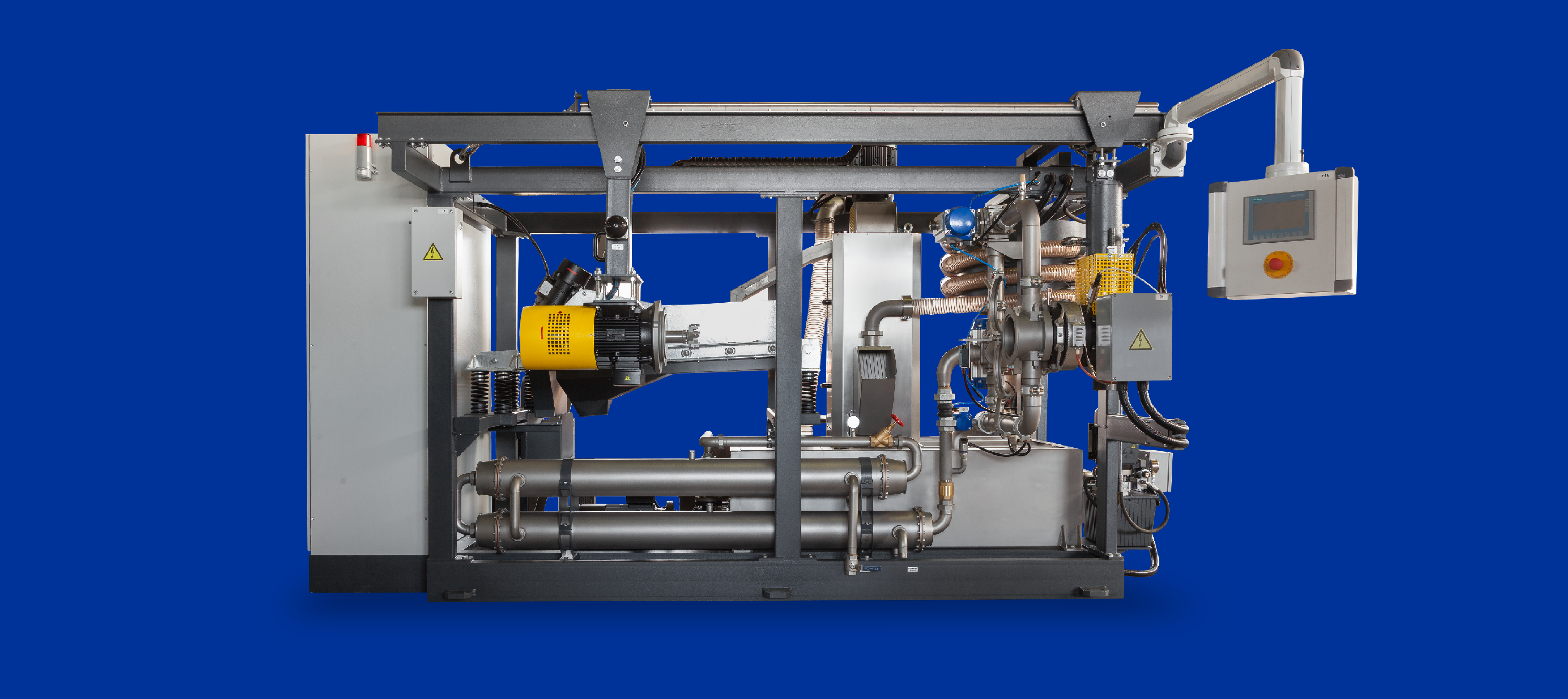
Granulation Systems
Plastics can only be pelletized efficiently when the system is precisely matched to both the material and the process. This is exactly where SIKOPLAST comes in. Our granulation systems help convert various plastics into processable granules in a controlled and reliable way — regardless of whether the input material originates from recycling streams or technical applications.
The quality of downstream dosing and processing largely depends on the granulation process itself. For this reason, SIKOPLAST develops systems specifically adapted to the properties of each material and designed for easy integration into existing production lines without major modifications. Every system configuration is optimized to ensure a reliable granulation process and consistent results during daily operation.
Overview of the Systems


Applications and Selection Criteria for SIKOPLAST Granulation Systems
SIKOPLAST granulation systems are used wherever plastics must be reliably converted into pellets. This includes recycling streams from post-consumer and industrial sources as well as engineering polymers and internal production waste.
The systems can be configured to produce pellets with precisely defined sizes. At the same time, they reliably process different melt characteristics and can be integrated into existing extrusion lines without significant modifications.
Companies particularly benefit from a SIKOPLAST solution when consistent pellet quality is required and the pelletizing process must be precisely matched to the extruder. An additional advantage is the ability to maintain predictable operating costs while ensuring long-term spare parts availability.
Overview of Pelletizing Technologies and Suitable Applications
SIKOPLAST relies on three proven pelletizing technologies and provides matching system solutions for each process. The following overview shows which technology best fits different materials and production goals.
| Process | Functional Principle | Ideal for | Advantages |
|---|---|---|---|
Dry-Cut Pelletizing (Air-Cooled) | The melt is cut, conveyed, and cooled in an air stream without using water | LD-PE, LLD-PE, MD-PE, HD-PE | Very economical, low energy consumption, no water required |
Water Ring Pelletizing | Knives rotate in air directly at the die plate. The pellets are then captured and transported away by a rotating water ring flowing along the housing wall | PE, PP, HDPE regranulates, fluctuating recycling streams | Compact design, excellent for changing melt properties, low operating complexity |
Underwater Pelletizing | Pellet cutting and cooling take place inside a fully water-filled chamber | TPE, TPU, EVA, PA, PET, EPS, XPS, engineering plastics, demanding compounds | Extremely uniform pellet shape and consistent pellet size |
Why Choose a Granulation System from SIKOPLAST?

Long-term spare parts availability for all critical components
Easy-access system design simplifying maintenance
Clearly structured control systems reducing operator errors
Flexible integration with extruders, melt filters, dryers, and conveying systems
Modular construction allowing future system upgrades
Many years of recycling experience integrated into every system design
This results in a granulation system that operates reliably while remaining economically efficient over the long term.
Integration into Existing Production Lines
A SIKOPLAST granulation system can be integrated into existing production processes with minimal effort. The systems can be connected to extruders, melt filters, dosing and material handling systems, drying units, or internal conveying technology. This allows the existing production environment to remain unchanged while the granulation process is modernized or expanded.

FAQ
Which granulation system is suitable for polypropylene?
In most cases, either water ring pelletizing or underwater pelletizing is recommended, depending on the desired pellet quality and appearance.
Which throughput capacities are possible?
The system is individually designed according to the extruder size and material characteristics. Capacities typically range from 30 kg/h up to 2 t/h.
Is it possible to switch between different materials?
Yes. The systems can be adapted to process different polymer types.
How high are the maintenance requirements?
The pelletizing systems are designed with excellent accessibility, allowing wear parts to be replaced quickly.
Can an existing extruder continue to be used?
In many cases, yes. Granulation systems can be integrated into existing production lines.