
 en
en
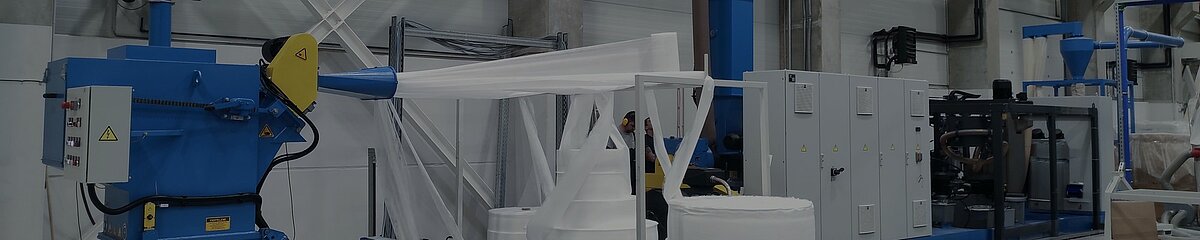
Extrusion Systems for Plastics Recycling: Solutions from SIKOPLAST
Whether film waste, nonwoven edge trim, injection-moulded parts or regrind: SIKOPLAST has been developing and manufacturing extrusion systems for over 70 years that process plastic waste in a material-friendly way and return it to the production cycle.
The heart of all SIKOPLAST systems is a conical single-screw extruder – a screw system that forms the core of the recycling plants and is optimised for feeding light, non-free-flowing materials.
The product range comprises three system types, each suited to different requirements: the off-line regranulation system, the SIKOREX in-line return extruder, and the HYBRID system.
The Three System Types in Detail
Off-line Regranulation System: Production Waste into High-Quality Regranulate
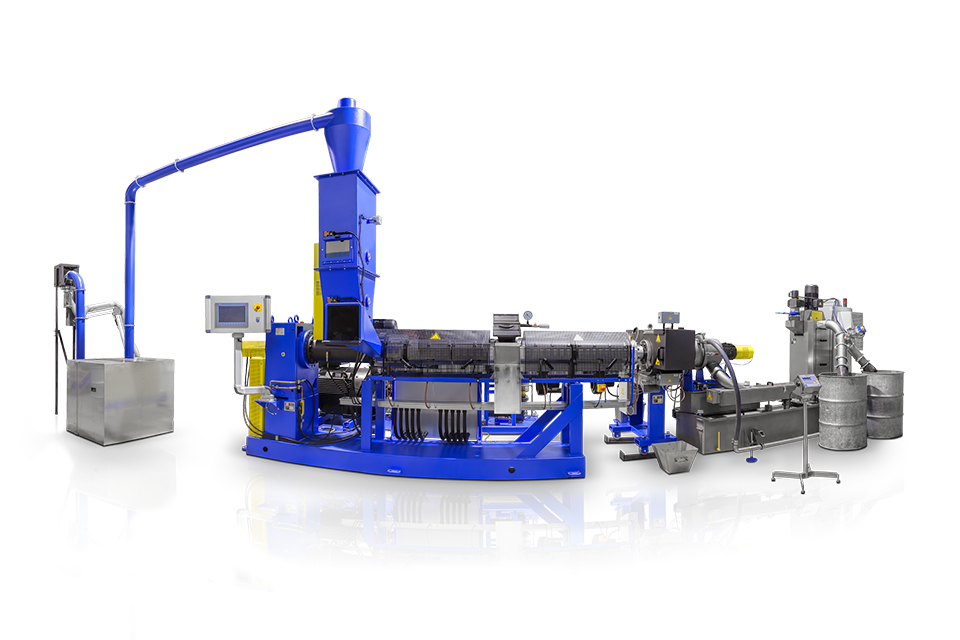
The off-line regranulation system processes pre-shredded thermoplastic materials – films, nonwovens, profiles, pipes, fibres, regrind and more – into regranulate. A special conical screw enables the processing of light, non-free-flowing materials without a preceding compaction stage. The product range extends from 30 kg/h to over 1,300 kg/h.
Suitable for: all thermoplastic materials, manufacturing companies with mixed waste streams, recyclers.
➡ To Off-line Regranulation Systems
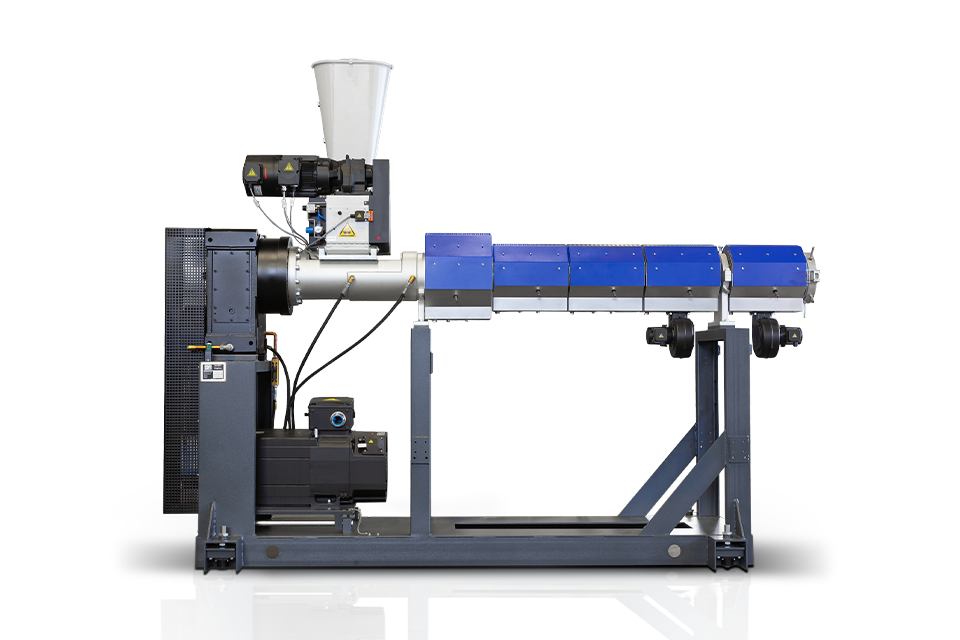
SIKOREX: Inline Return Extruder for Nonwoven and Film Production
The SIKOREX returns edge trim and roll goods directly from the winder as melt back into the production extruder – without pre-shredding, without intermediate granulate. Energy consumption approximately half that of off-line systems. Intake speeds up to 375 m/min; special designs up to 600 m/min.
Suitable for: nonwoven and PE/PP film industry, edge trim and roll return in ongoing production.
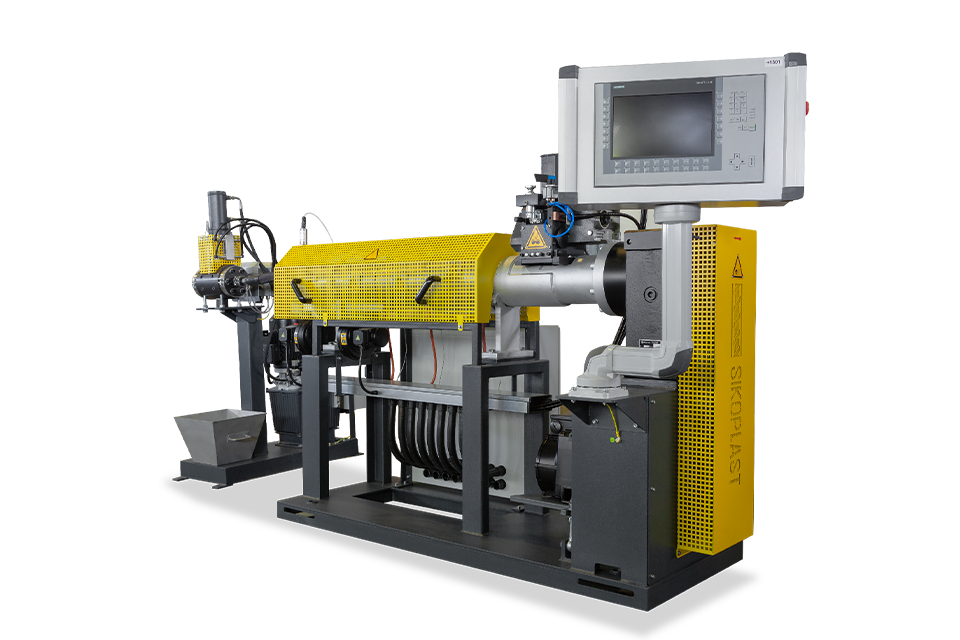
HYBRID System: Inline Recycling for High-Speed Production
The HYBRID system covers all requirements of modern spunbond production – including high-speed winders at speeds exceeding 1,500 m/min. It processes all waste types simultaneously: edge trim, roll goods including master rolls and loose waste. In master-slave mode, the return rate is automatically adjusted.
Suitable for: spunbond production with high-speed winders, multi-line operation, hygiene and medical sectors.
Which Extruder Fits Which Application?
The following overview provides an initial guide. For precise system sizing, we recommend direct consultation.
| Off-line Regranulation System | SIKOREX | HYBRID System | |
|---|---|---|---|
Application | Processing of production waste into regranulate | Direct inline return as melt Input form: thin edge trim and medium-width roll goods | Inline return at high speed and multiple lines Input form: edge trim, roll goods, loose waste and start-up lumps |
End product | Regranulate | Melt → directly into production extruder | Melt → directly into production extruder |
Material spectrum | All thermoplastics: films, nonwovens, profiles, regrind, fibres, etc. | Nonwoven and PE/PP film industry | Spunbond production |
Speed | Not relevant (batch process) | Up to 375 m/min (special designs up to 600 m/min) | Over 1,500 m/min |
Throughput | 30 kg/h to over 1,300 kg/h | 30–250 kg/h per extruder | 30–250 kg/h per extruder, multiple lines combinable |
Pre-shredding | Yes – cutting mill | Not required | Yes – cutting mill (for roll goods/loose waste) |
Hygiene/medical sector | – | Yes – contamination-free material feed | Yes – contamination-free material feed |
Typical target application | Manufacturing companies with plastic waste of all kinds | Nonwoven and film production with edge trim and roll goods | Spunbond production with high-speed winders |
What All SIKOPLAST Extrusion Systems Have in Common
Regardless of system type, the same fundamental principles apply to all SIKOPLAST systems:
- Conical single-screw extruder as the centrepiece – optimised for light, non-free-flowing materials
- Melting under exclusion of oxygen – no oxidative degradation, material-friendly process
- Modular design – adaptable to the application, throughput and spatial conditions
- Drive and control components from German manufacturers, including Siemens and Koellmann
- Over 70 years of experience in plastics recycling plant engineering
FAQ
What is an extrusion system for plastics recycling?
An extrusion system for plastics recycling processes thermoplastic plastic waste by melting and reprocessing it into regranulate, or returns the melt directly to the production process. The extruder – with an optimised screw geometry – is the central unit.
What is the difference between inline and offline recycling?
With offline recycling, the material is processed in a separate step and converted into regranulate, which must then be remelted. Inline recycling, on the other hand, returns production waste directly in the ongoing production process as melt – without intermediate granulate and with approximately half the energy consumption.
Which materials are the systems suitable for?
The off-line regranulation system processes all common thermoplastics: films, nonwovens, profiles, pipes, injection-moulded parts, fibres, yarns, regrind as well as printed, coated and slightly contaminated materials. The inline systems SIKOREX and HYBRID are specially developed for the nonwoven and film industry.
What is a regranulation system?
A regranulation system is an extrusion system that melts plastic waste and processes it into granulate. The regranulate can subsequently be used in production like virgin material. At SIKOPLAST, the off-line regranulation system is the corresponding system type.
Does SIKOPLAST also supply individual components?
Yes. In addition to complete system solutions, SIKOPLAST also supplies individual components such as extruders, granulation systems, cutting mills, screen changers, silos and conveyor belts – both for new systems and to supplement existing ones.